How to Do PAT Testing: Your 10-Step Guide to In-House Testing
Most organisations can save money and gain flexibility over when testing happens by carrying out PAT testing in-house rather than contracting it out. This 10-step guide to your first PAT test walks you through exactly how to get started.

Why Do In-House PAT Testing
Bringing PAT testing in-house means you're no longer waiting on a contractor's schedule, and you're not paying for a call-out every time a new appliance needs checking. It does mean getting the basics right from the start: the right person, the right training, and the right equipment.
This guide breaks how to do PAT testing down into ten practical steps, from appointing someone responsible through to recording your first results. If you'd rather learn hands-on, our PAT training courses cover all of this in more depth.
10 Steps to In-House PAT Testing
Appoint a Responsible Person
Start by deciding who within your organisation will own PAT testing. This doesn't need to be an electrician, but it should be someone reliable who can be trained properly and take responsibility for keeping records up to date.
Get Them Properly Trained
Whoever takes on the role needs proper training before they pick up a tester. First Stop Safety offers both online and face-to-face PAT training courses, designed for people with no prior electrical experience.
Train All Staff to Spot Potential Dangers
PAT testing isn't only the responsibility of one person. Give all staff a basic understanding of what to look out for: frayed cables, cracked plugs, scorch marks, so problems get flagged between formal testing intervals, not just during them.
Train All Staff to Spot Potential Dangers
PAT testing isn't only the responsibility of one person. Give all staff a basic understanding of what to look out for: frayed cables, cracked plugs, scorch marks, so problems get flagged between tests, not just during them.
Make a List of All Electrical Appliances on Site
Before you can test anything, you need to know what you've got. Walk the premises and list every electrical appliance, from kettles and monitors to power tools and portable heaters, so nothing gets missed.
Assess Inspection and Testing Intervals
Not every appliance needs testing on the same schedule. How often you test depends on the type of equipment, how it's used, and the environment it's in. Higher-risk items in harsher environments (e.g. workshop tools) typically need more frequent checks than office equipment.
Buy a Tester with a Clear Pass/Fail Result
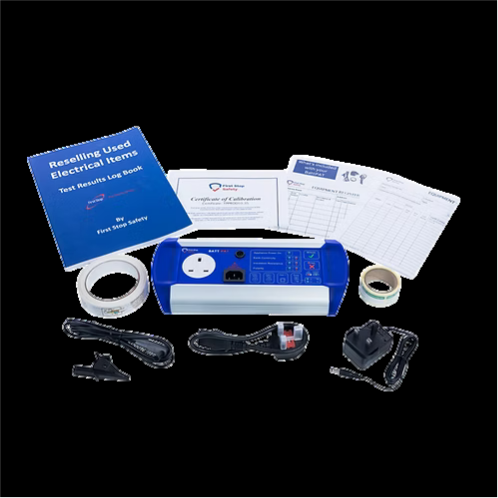
Choose a tester that gives a straightforward PASS or FAIL indication, so results are unambiguous even for a first-time tester. The BattPAT is one of the simplest PAT testers available and a common starting point for organisations testing in-house for the first time.
Carry Out Inspection and Testing at the Right Intervals
With your list, your schedule and your tester in hand, begin working through your appliances. A Formal Visual Inspection should always accompany the electrical test, since many faults are visible before they ever show up on a reading.
Record Results and Label Equipment
Every test needs a record, and every appliance needs a label showing it's been tested. This is what makes your in-house programme demonstrably compliant if it's ever questioned, a clear paper trail from test to result.
Test New Equipment as it Arrives
Don't wait for the next scheduled round. Any new appliance brought onto the premises, whether purchased by the organisation or brought in by staff or residents, should be tested before it's put into use.
Use Our Help Line if You Get Stuck
PAT testing throws up genuine edge cases, extension leads, multi-way adaptors, unusual appliances. If you're not sure how something should be tested or classified, call our team on 01904 791050. We're happy to talk it through.
Common Questions About Getting Started
No. PAT testing is designed to be carried out by a trained, competent person, not necessarily a qualified electrician. Proper training is what makes someone competent to test, not a formal electrical qualification.
Most organisations are testing confidently within a day or two of training, once they've got their appliance list and schedule in place. The learning curve is genuinely short with the right tester and guidance.
A Formal Visual Inspection is a close visual check of the plug, cable and casing for obvious damage. A full PAT test adds electrical checks, such as earth continuity and insulation resistance, using a tester. Both should be carried out together at scheduled intervals.
For most first-time in-house testers, a straightforward PASS/FAIL tester like the BattPAT is the easiest starting point, no interpreting readings, just a clear result. Browse our PAT testers to compare options.
Contact us
Contact us about anything related to our company or services.